Day 9 · June 29, 2026
By Brush and by Machine
Art Building & Training Building
Day nine gave us two ways of making in a single day. In the morning we sat at computers in Art Classroom 303 for a Creative Design and Cultural Integration workshop; in the afternoon we picked up brushes for our first proper lesson in Chinese calligraphy. One day, two tools, and the same question running through both: what does Lingnan culture look like when you make something new out of it?
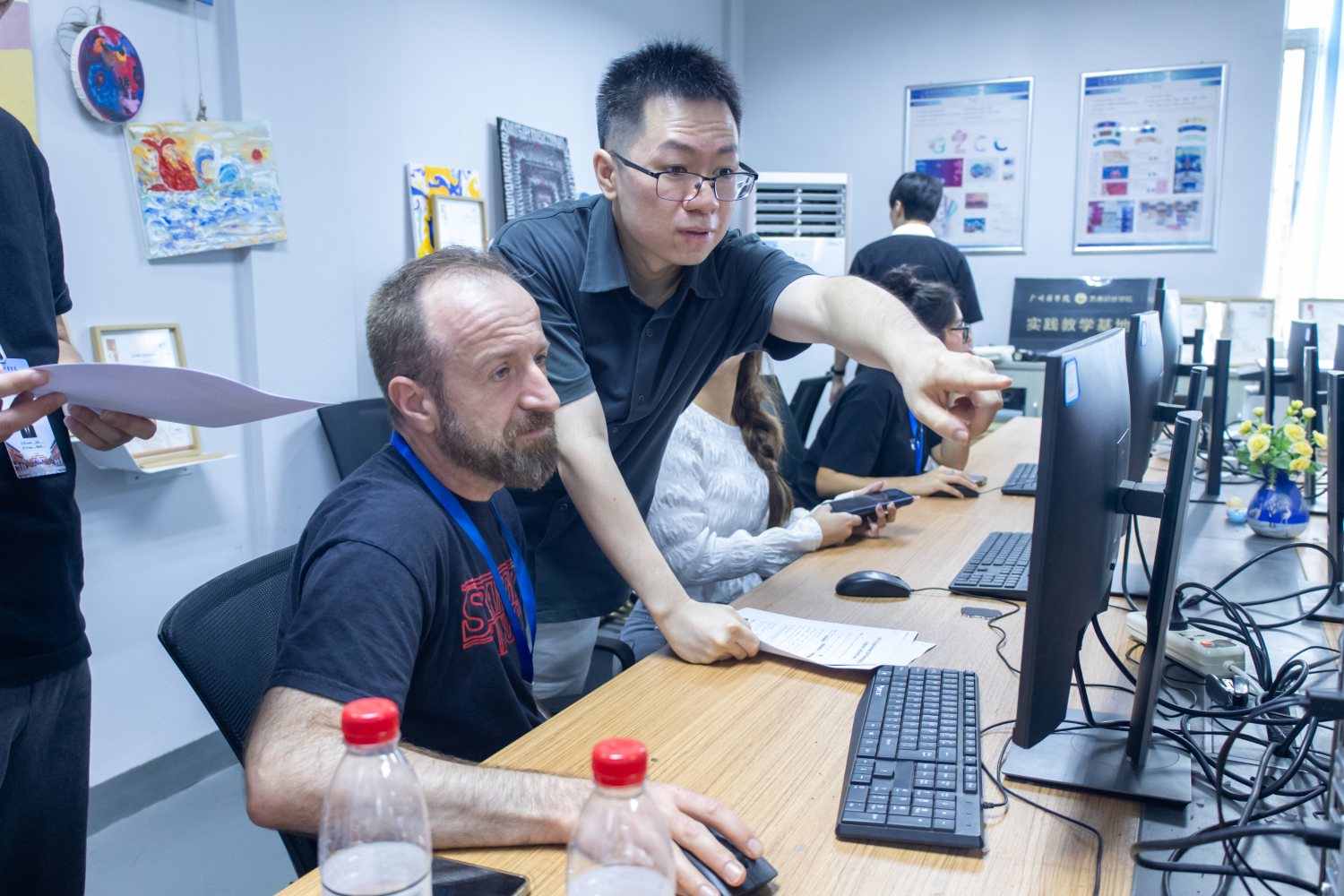
The morning workshop was built around Lingnan cultural-creative design, and the tool of the day was AI. Our brief was to dream up mascots rooted in Lingnan tradition, then coax the software into drawing them. It was strange and wonderful to describe a creature in words and watch a picture arrive a few seconds later.
Mascots Made with Machines
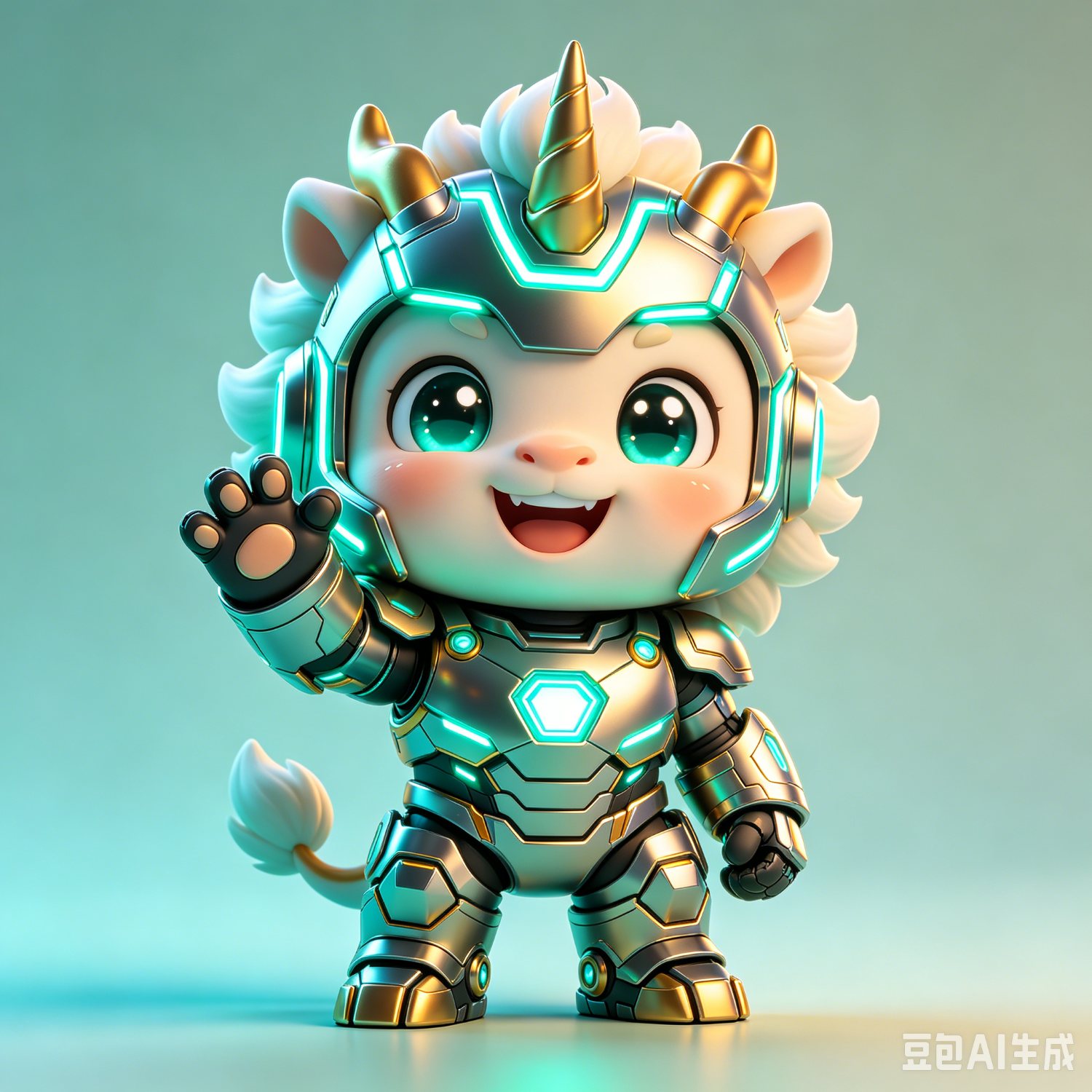
We reached for the oldest Lingnan symbols we could think of: the qilin, that gentle unicorn-lion of the lion-dance, and the phoenix rising bright over the south. Then we handed those ideas to the AI and watched it try. Prompt by prompt, we adjusted, coaxed, and argued with the software until the creatures started to feel like ours.
One design stopped us all: a small, armoured qilin, plated like a knight and glowing softly at the edges, cute and fierce at once. It was not something any of us could have drawn by hand, and yet it was unmistakably Lingnan. That, we decided, was the whole point of the exercise: new tools, old roots.
Brush, Ink, and Patience
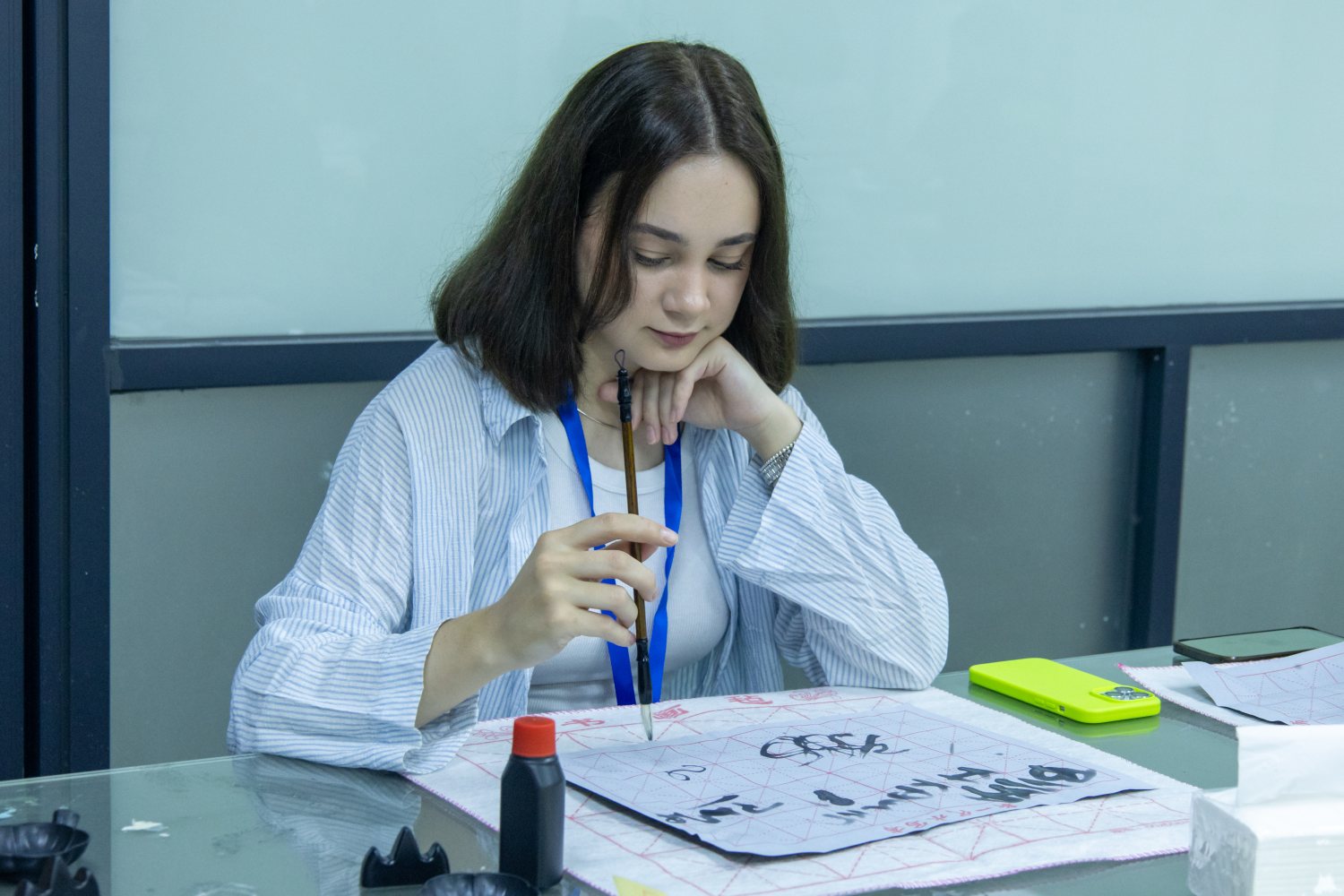
In the afternoon we crossed to Art Classroom 113B in the Training Building and swapped keyboards for brushes. Fundamentals of Chinese Calligraphy sounds simple until you try to hold the brush upright, load it with ink, and lay down a single stroke that neither floods nor starves. The room went quiet in a way the morning never did.
On sheets of yellow grid paper, each square waiting for one character, we practiced the same strokes over and over: a downstroke, a turn, a sweeping tail. Our teacher moved between the desks, steadying a wrist here, remaking a stroke there, always patient. Slowly, clumsily, our characters began to stand up straight.
"China Loves Egypt"
Not everyone wrote the copybook phrases. One of us, the ink still wet, lifted a finished sheet that read "China loves Egypt." It was written in an ancient script by a hand that had first held a brush only hours before, and it said something this whole trip kept saying: that friendship travels easily, in whatever characters you happen to have.
We had spent the morning teaching machines to draw Lingnan and the afternoon teaching our own hands to write it. Between the two, the day had quietly made its argument: that culture is not only a thing you inherit, but a thing you keep making, with a brush or with a machine, and best of all, together.