Day 5 · June 25, 2026
Indigo and the Stars
A partner institution
We spent the whole of day five at a partner institution, and on paper the schedule read like two unrelated things bolted together: a morning of satellites and new-energy technology, an afternoon of dyeing cloth by hand. By evening we had decided they belonged together after all.
Both were, in their own way, about how a place makes things. One reached up toward orbit; the other reached back through centuries. Guangzhou, we were slowly learning, is comfortable holding both at once.
New Energy and the Beidou Stars
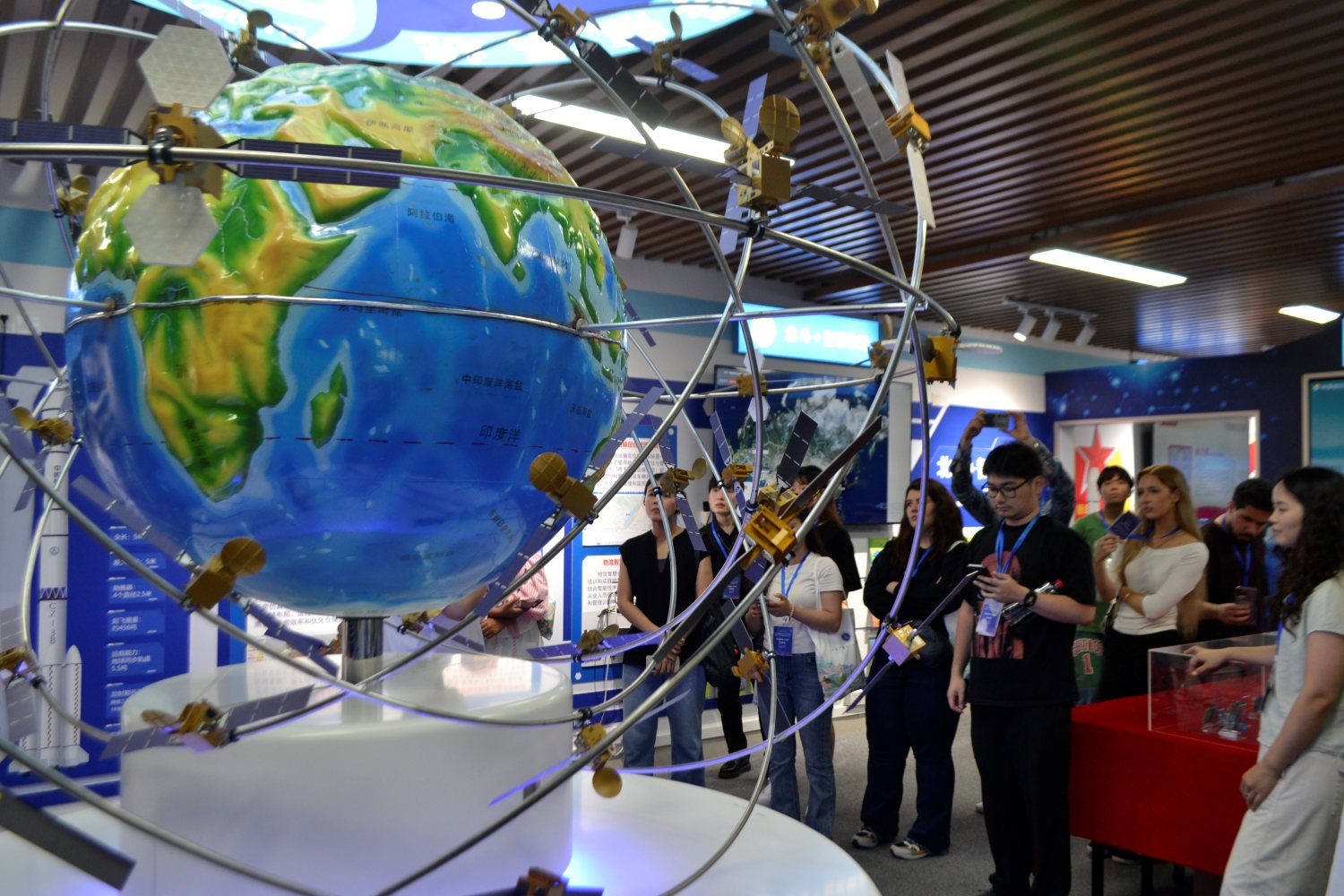
The morning unfolded in an exhibition hall built around a large illuminated globe, wrapped in slowly turning rings of satellite orbits. Our hosts walked us through China's new-energy technology and the Beidou navigation system, the constellation of satellites that tells this part of the world exactly where it stands.
We had leaned on Beidou for the whole trip without ever knowing its name, every map on our phones quietly borrowing from it. Standing under the glowing model, watching the orbit rings circle the globe, the invisible machinery of a modern city suddenly had a shape we could point to.
Knotting the Cloth, Dipping the Blue
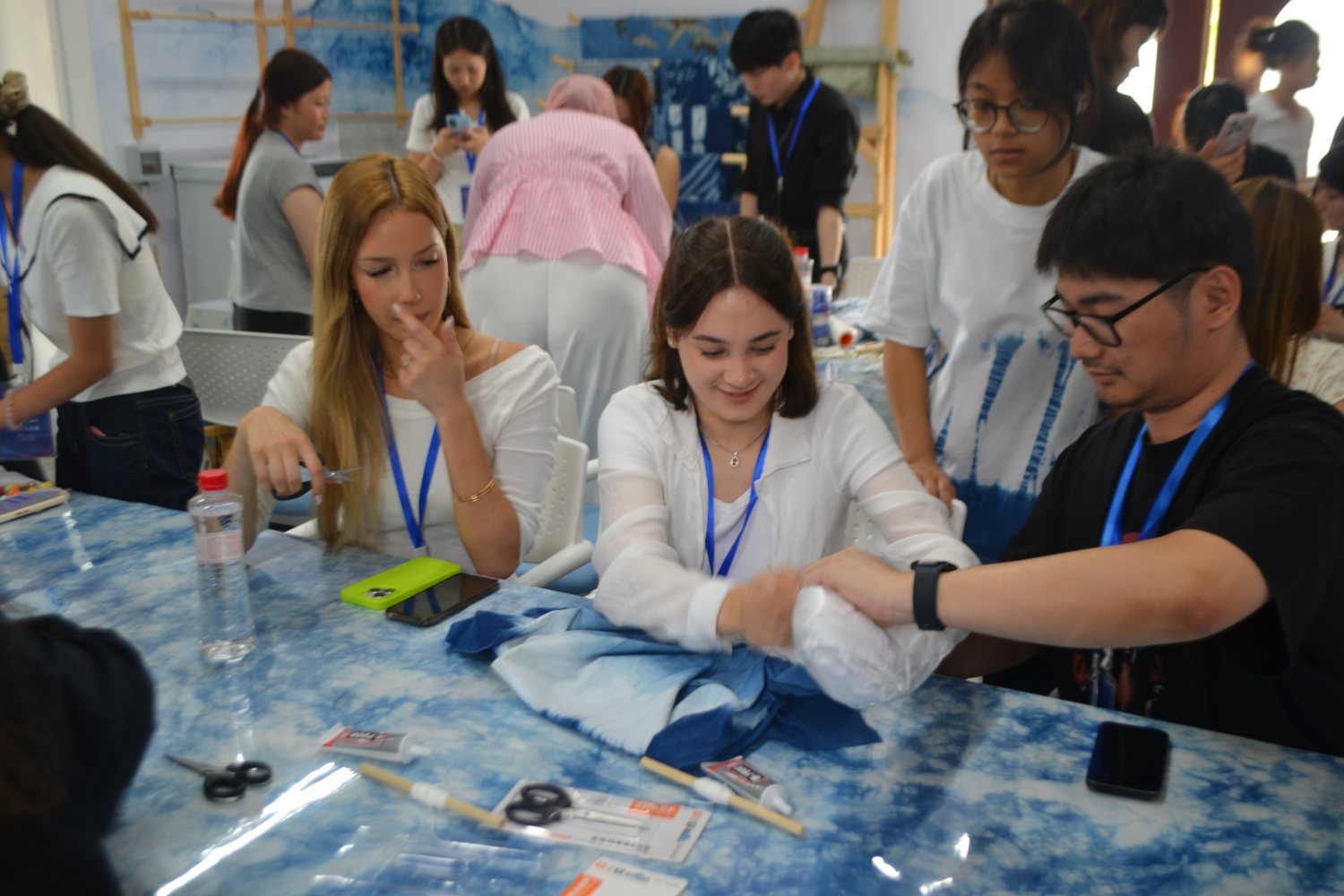
In the afternoon the technology fell away and we sat down at long tables to learn indigo batik, an intangible-heritage craft. First came the knotting: folding, pleating, and binding a square of white cloth so tightly that the dye could not reach every fiber. The tighter the knot, our instructors promised, the sharper the white star it would leave behind.
Then came the dipping. Hands went into the vat and came out blue, and the cloth with them, deepening shade by shade with every return to the indigo. Nobody's hands stayed clean, and nobody minded in the least. There is a particular joy in making something with a color that also stains you.
Blue Drying on the Line
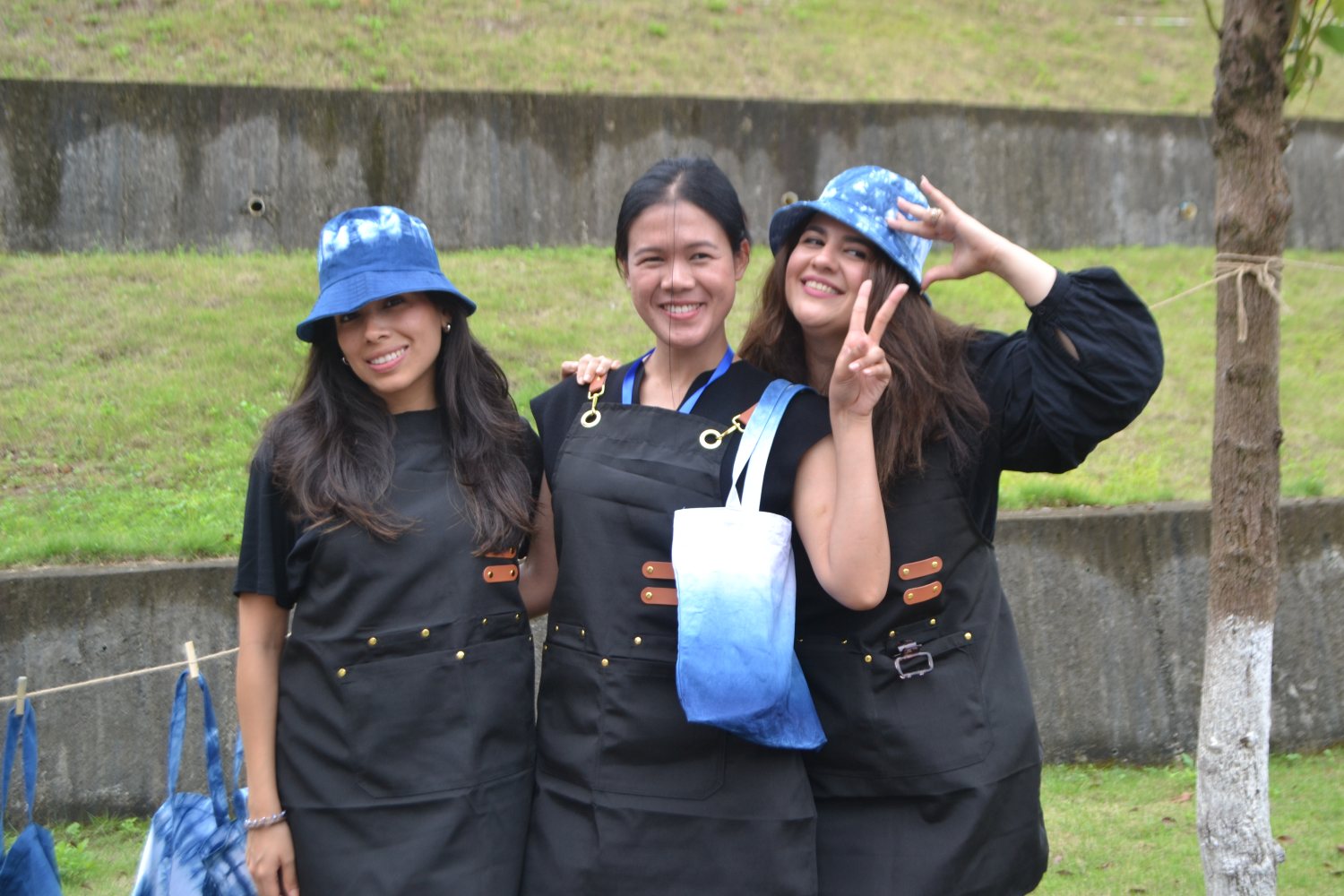
We untied our knots by a grassy embankment and hung the finished pieces on a line to dry, and only then did we see what we had made. No two cloths were alike; every knot had left a different constellation of white on blue. Some of us had dyed bucket hats and put them on straight away, grinning in our aprons like a slightly damp, slightly blue field trip.
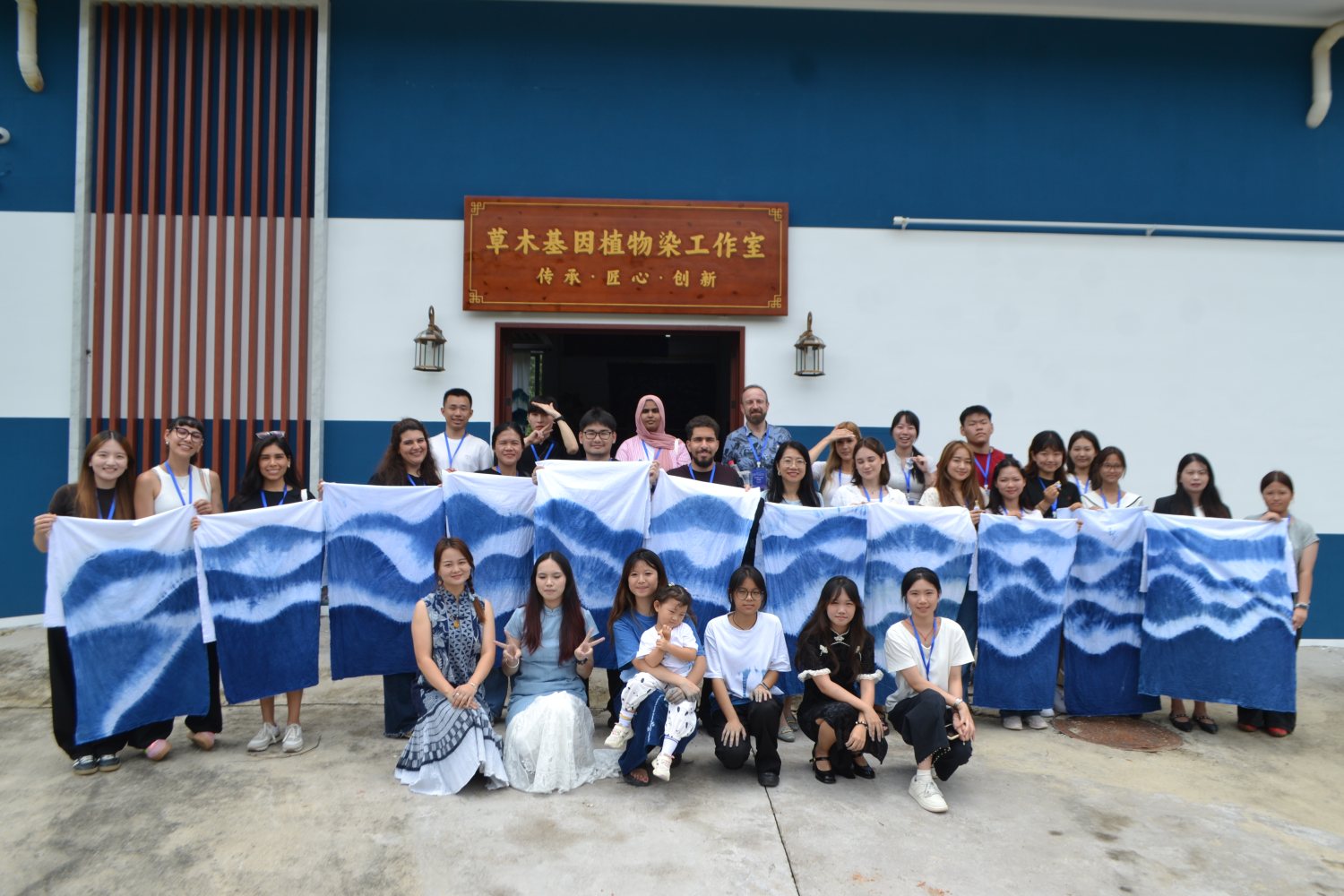
At the end we gathered in front of the plant-dye studio and held our cloths up together, a whole cohort of Bournemouth, Chinese, and Korean students turned the same shade of Guangzhou indigo. Morning stars, afternoon dye: it had been a day about the things a place chooses to keep, and we were carrying a piece of one home, still faintly smelling of the vat.